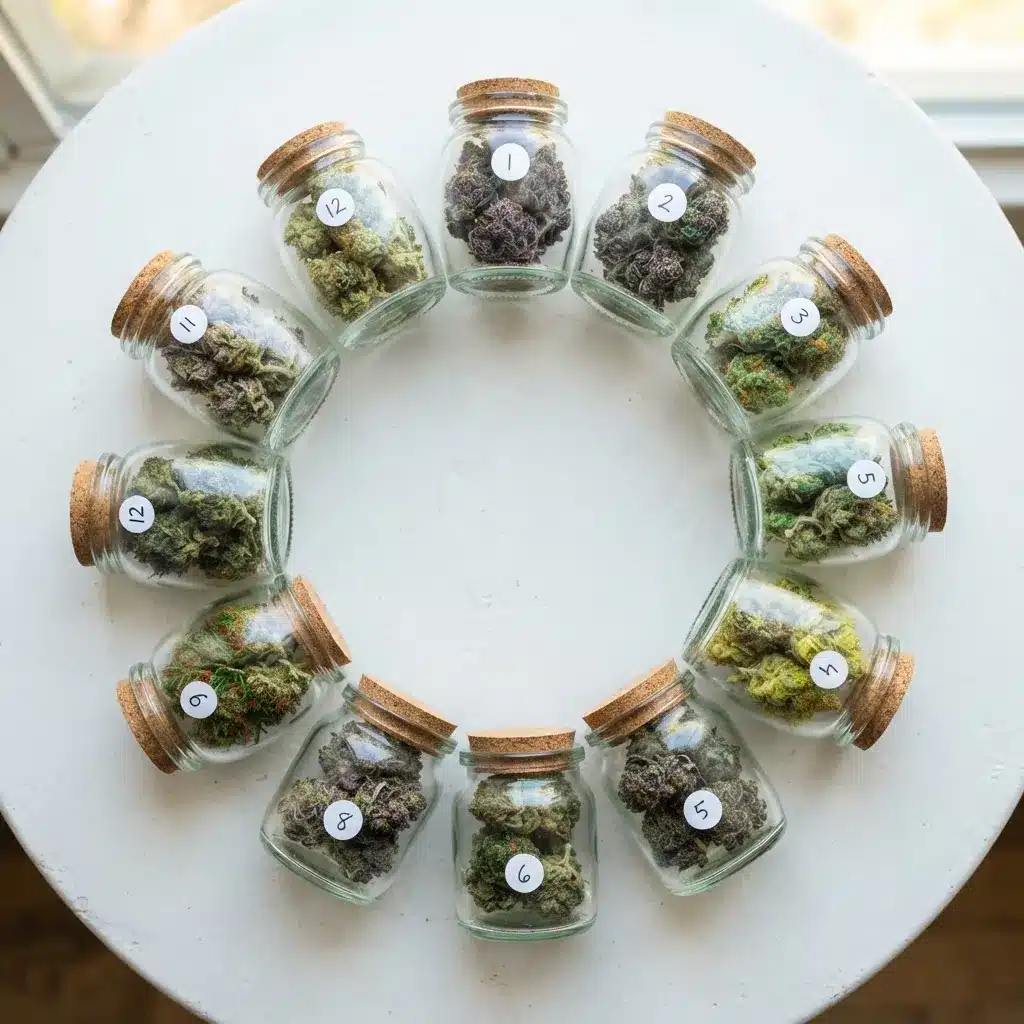
Walk into any dispensary and you’ll hear it: “Do you want an indica or a sativa?” For decades, this simple binary has been the default way to talk about cannabis effects. Indica means couch-lock, sativa means energy, and hybrid means somewhere in between — right? Not exactly. The reality is far more nuanced, and modern science has revealed that this old framework is more myth than mechanism.
In this guide, we’ll unpack what the indica, sativa, and hybrid labels actually mean, why they often fail to predict your experience, and what you should look at instead. By the end, you’ll understand the real science behind cannabis effects and have a practical system for choosing the right strain every time. Let’s separate fact from folklore, science from marketing, and clarity from confusion.
The Origin of Indica and Sativa: It’s About Plants, Not Effects
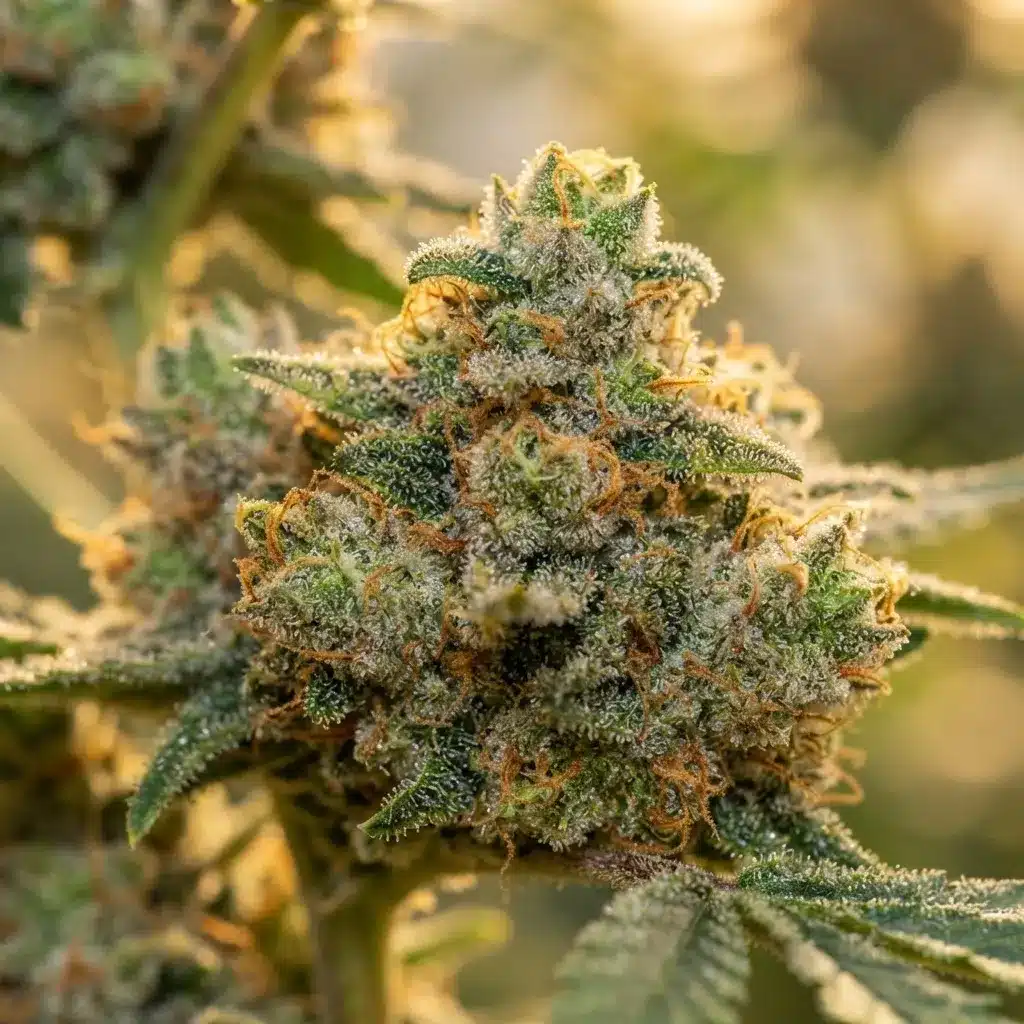
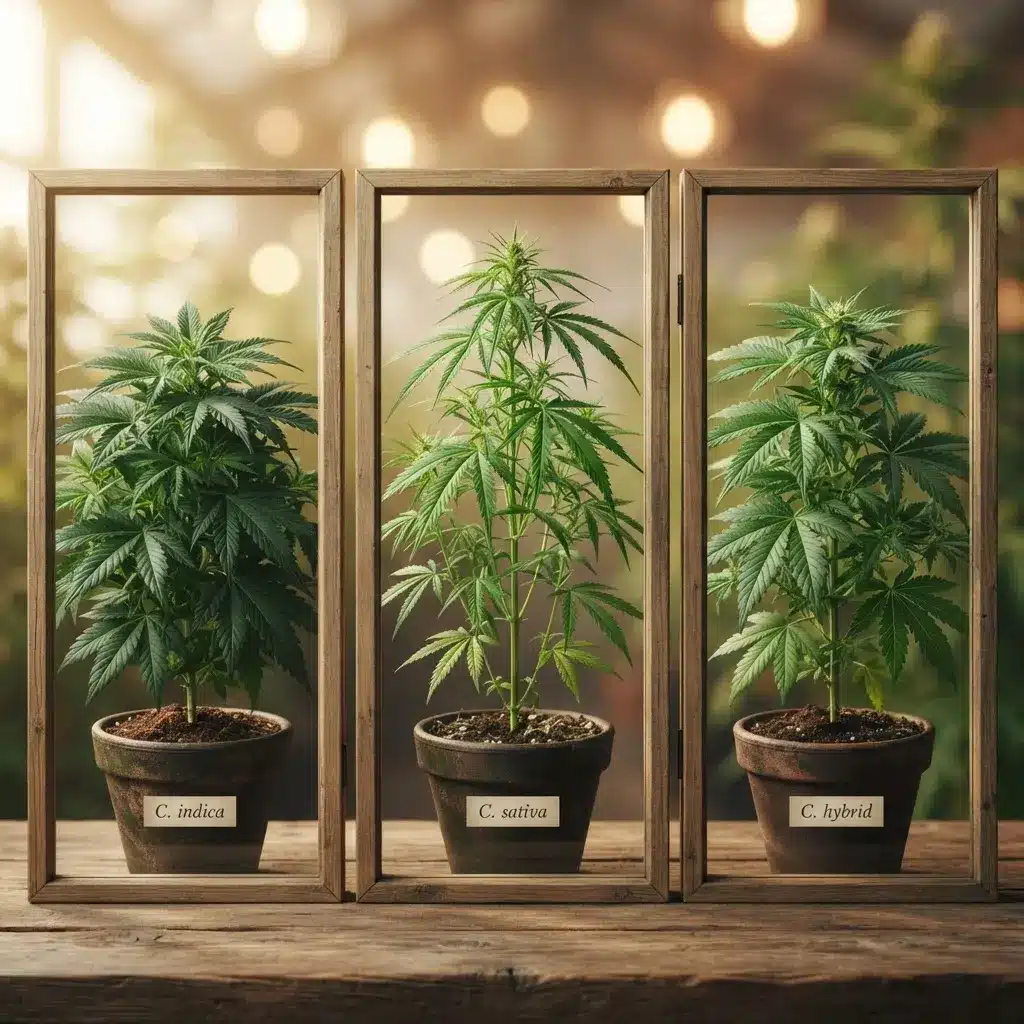
The terms Cannabis sativa and Cannabis indica were coined by biologists in the 18th century to describe different physical plant structures, not different effects on the human body. Cannabis sativa described tall, narrow-leafed plants from warm climates, while Cannabis indica described short, bushy, wide-leafed plants from mountainous regions. These botanical classifications describe how the plant looks and grows — its height, leaf shape, and flowering time — not how it will make you feel after consuming it.
The effects-based shorthand (“indica = relaxing, sativa = energizing”) emerged later, largely from anecdotal tradition and dispensary culture. According to a 2023 review in PMC (NIH), the indica/sativa distinction describes plant morphology, not predictable pharmacological outcomes. In other words, the label tells you about the plant’s family tree — but says surprisingly little about the experience you’ll have after consuming it. It’s a description of ancestry, not a prediction of effects.
Here’s the problem: A “sativa” strain can be deeply sedating. An “indica” can be wildly energizing. The label alone is not a reliable predictor of effects, and relying on it is like choosing a book by its cover.
Why the Old Indica/Sativa Myth Doesn’t Hold Up
Modern cannabis genetics have made the indica/sativa split increasingly meaningless. Decades of crossbreeding mean most strains on the market today are hybrids of hybrids, with genetic lineages so intertwined that calling a strain “pure indica” or “pure sativa” is more marketing than science. A 2019 genetic study analyzed hundreds of cannabis samples and found that the reported indica/sativa labels frequently didn’t match the plants’ actual genetic clusters — meaning the labels themselves are often inaccurate and unreliable.
Even when the label is genetically accurate, two plants with the same classification can produce opposite effects. This happens because the effects of cannabis are determined by its chemical composition — primarily its terpene and cannabinoid profile — not its botanical species. Think of it like wine: calling something a “red” tells you the grape color, but nothing about whether it’s dry, sweet, light, or full-bodied. The same logic applies to indica and sativa labels in cannabis: they describe a surface characteristic while ignoring the chemistry that actually matters. The National Institute on Drug Abuse (NIDA) acknowledges that a strain’s effects depend on multiple factors beyond simple categorization, including potency, terpene content, and individual user biology.
Terpenes: What Actually Determines Your Experience
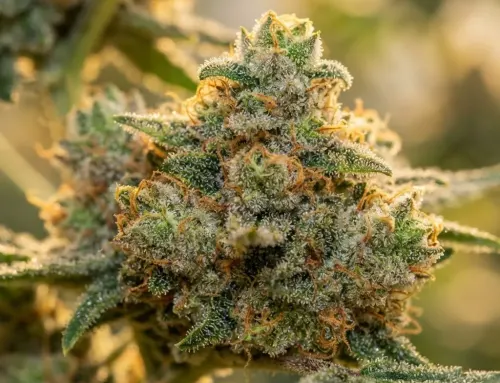
If the indica/sativa split is the outdated map, terpenes are the GPS. Terpenes are the aromatic oils that give cannabis strains their distinctive smells — pine, citrus, earth, lavender, pepper — and research increasingly confirms they’re the primary drivers of a strain’s unique effects. A 2021 study from the University of Arizona found that cannabis terpenes independently produce effects like pain relief, mimicking cannabinoids through the body’s own pathways.
This is why two strains both labeled “sativa” can feel completely different. One might be rich in limonene (citrus, uplifting, mood-elevating) while another is dominated by myrcene (earthy, sedating, relaxing) — despite carrying the same sativa label. The terpene profile, not the species classification, is what you’ll actually feel. Once you start reading terpene profiles instead of indica/sativa labels, your ability to predict effects improves dramatically and consistently.
Here’s a practical terpene-to-effect guide you can use when browsing menus. Each terpene listed below has been studied for its potential effects, and most reputable dispensaries and delivery services list at least the top three terpenes on their product pages. Use this as your starting framework, then refine based on your own experience over time:
- Myrcene (earthy, musky) — Relaxation, sedation, body calm
- Limonene (citrus, lemon) — Mood elevation, stress relief, focus
- Pinene (pine, fresh) — Alertness, mental clarity, memory support
- Caryophyllene (pepper, spice) — Anti-inflammatory, stress relief
- Linalool (floral, lavender) — Calming, anxiety reduction
Pattern interrupt: Next time someone asks “indica or sativa?” — try asking “what terpenes does it have?” instead. You’ll get a far more useful answer, and you’ll be shopping like a connoisseur instead of a beginner.
Indica vs Sativa vs Hybrid: Effects Comparison Table
Despite their limitations, the indica/sativa/hybrid labels aren’t useless — they’re just imprecise. They can still serve as a rough starting point, especially if you combine them with terpene information. The table below summarizes the traditional associations alongside what the chemistry actually suggests, giving you a two-layer approach to strain selection. Use it as a reference, not a rulebook, and always prioritize the terpene data over the category label.
| Category | Traditional Association | What Really Matters | Best For |
|---|---|---|---|
| Indica | Body high, relaxation, sleep | High myrcene, linalool content | Evening use, pain relief, insomnia |
| Sativa | Head high, energy, creativity | High limonene, pinene content | Daytime use, focus, socializing |
| Hybrid | Balanced effects | Terpene ratio determines lean | Anytime use, tailored effects |
Notice that the “What Really Matters” column always points back to terpenes. That’s not a coincidence — it’s where the science consistently leads us. The traditional column gives you a familiar frame of reference, but the real predictive power lives in the chemistry. When you combine both layers — the category for a general direction and the terpenes for specifics — you get the best of both worlds without falling into either extreme. This hybrid approach respects tradition while embracing science, giving you a practical method that works whether you’re ordering from a full menu or asking a quick question on the phone. It also explains why so many experienced consumers describe their favorites in terms of aroma and effect rather than simple indica or sativa labels.
Practical Guide: If You Want X Effect, Look for Y Terpenes
Let’s turn the science into an actionable system. Instead of asking “is this an indica or sativa?” start by identifying your desired effect, then match it to the terpenes most likely to deliver it. If you want relaxation and sleep, seek out myrcene-dominant strains — look for earthy, musky aromas in the Kush and OG families. If you want focus and daytime energy, hunt for limonene and pinene — think bright, citrusy, pine-scented sativas like Jack Herer or Super Lemon Haze.
For stress and anxiety relief, caryophyllene and linalool are your go-to terpenes — they’re associated with calming, anti-inflammatory effects without heavy sedation. If you’re after pain management, combine myrcene with caryophyllene for synergistic analgesic potential. And for social ease, balanced hybrids with moderate THC and a limonene-forward profile often provide the perfect middle ground — uplifted but not overwhelming, social but not wired.
Explore our flower selection to find strains matching your terpene goals, and check our deals page for savings on top-shelf options. Shopping by terpene rather than by category label will transform your experience — fewer disappointments, more consistency, and better value with every order you place.
The Entourage Effect: Why Whole-Plant Chemistry Matters
The concept of the entourage effect suggests that cannabis compounds work better together than in isolation. Cannabinoids (THC, CBD, CBG, CBN) and terpenes interact synergistically, potentially producing richer, more therapeutic effects than any single compound alone. A 2024 study published in PubMed explored this complementary relationship, examining how terpenes may enhance the therapeutic potential of medicinal cannabis products in ways that isolated compounds cannot replicate.
While the scientific community is still debating the exact mechanisms — some studies have found strong evidence for synergy while others have been more cautious — the practical implication remains the same. Full-spectrum cannabis with diverse terpene and cannabinoid profiles tends to deliver more nuanced, well-rounded effects than isolated THC or CBD products. This is why reading the full chemical profile of a strain matters more than any single number on the label, and why experienced consumers increasingly prefer whole-flower over distillate-only products.
Key takeaway: The entourage effect means the whole plant is greater than the sum of its parts. Diverse terpene and cannabinoid profiles deliver richer, more balanced, and more therapeutic experiences than isolated compounds ever could.
Hybrid Cannabis Explained: The Best of Both Worlds?
Hybrids are the most common category on modern menus, and for good reason — nearly every commercially available strain is technically a hybrid after decades of crossbreeding. But “hybrid” as a label is only useful when you look deeper. A hybrid can lean indica-dominant (relaxing, body-forward), sativa-dominant (uplifting, cerebral), or be truly balanced. The ratio tells you the general direction, but the terpene profile tells you the destination with real precision.
When shopping for hybrids, look for the dominant terpenes first, then use the indica/sativa ratio as a secondary filter. A 60/40 indica-dominant hybrid with high myrcene will feel relaxing, while a 60/40 sativa-dominant hybrid with high limonene will feel energizing — despite both being labeled “hybrid.” This two-layer approach gives you the best of both classification systems: the precision of terpene science with the familiar shorthand of indica/sativa ratios.
Browse our full shop to explore hybrid options, and read more in our complete cannabis strain guide for a deeper dive into strain families and cannabinoid science. Understanding how hybrids work unlocks the widest range of effects available on today’s market — it’s where the real artistry of cannabis cultivation lives, grows, and evolves.
Making the Shift: From Labels to Chemistry
Changing how you think about cannabis doesn’t happen overnight, but it’s worth the effort. Start by glancing at the terpene profile every time you browse a menu. After a few weeks, you’ll notice patterns — certain terpenes consistently deliver the effects you love, and the indica/sativa label starts to feel like the rough guide it really is. Your journal or a simple notes app can track strains, terpenes, and effects to accelerate this learning curve dramatically.
The reward for this shift is enormous: instead of rolling the dice every time you order, you’ll make informed, confident choices based on chemistry that actually predicts your experience. That’s the difference between hoping a strain works and knowing it will — between random purchases and intentional selection. At 420 Nugz, we provide the product information you need to shop this way, because an educated member is a satisfied member, and a satisfied member is the foundation of everything we do as a collective.
The cannabis landscape will keep evolving — new strains, new extraction methods, new research findings emerge every year. But the principles in this guide are built to last. Terpenes will still drive effects, whole-plant chemistry will still outperform isolates, and informed choices will always beat guesswork. Whether you’re a first-time patient or a seasoned connoisseur, the shift from labels to chemistry is the single most important upgrade you can make to your cannabis journey. Start small, stay curious, track your results, and let the science guide you toward strains that truly serve your needs, support your overall well-being, and consistently enhance your daily life with intention, purpose, and confidence.
Disclaimer: 420 Nugz is a legal medical cannabis collective operating under California Proposition 215 (the Compassionate Use Act of 1996) and SB 420. Cannabis is for qualified medical patients only. The information in this guide is for educational purposes and is not a substitute for professional medical advice. Always consult a qualified healthcare provider before using cannabis for medical purposes. You must be 21 or older with a valid medical recommendation to order.